Output
Publications
Peer-reviewed articles and preprints in reverse chronological order. See Google Scholar for citation metrics.
Preprints
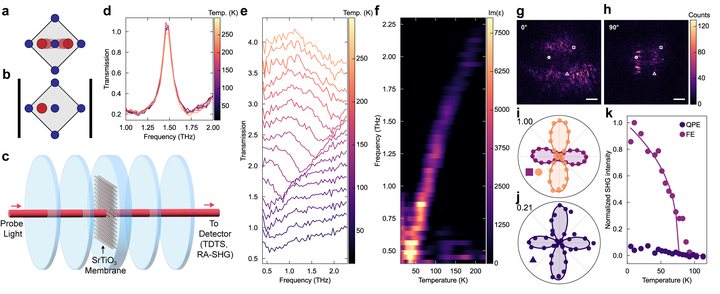
- arXiv Cavity-engineered ferroelectricity in SrTiO3
Free-standing SrTiO3 membranes coupled to dark terahertz photonic crystal cavities reach ultrastrong coupling with the ferroelectric soft mode. The cavity both induces and enhances ferroelectric order.
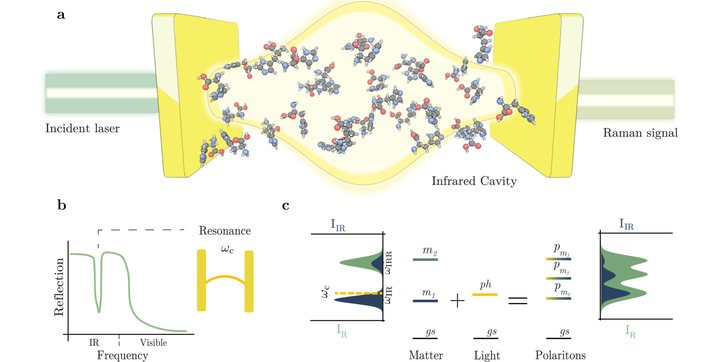
- arXiv Enriching molecular Raman spectroscopy with vibrational strong coupling
Vibrational strong coupling in an infrared cavity reshapes molecular Raman spectra, resolving nearly degenerate modes and brightening Raman-inactive ones. This could add controllable fingerprints for molecular identification in biological samples.
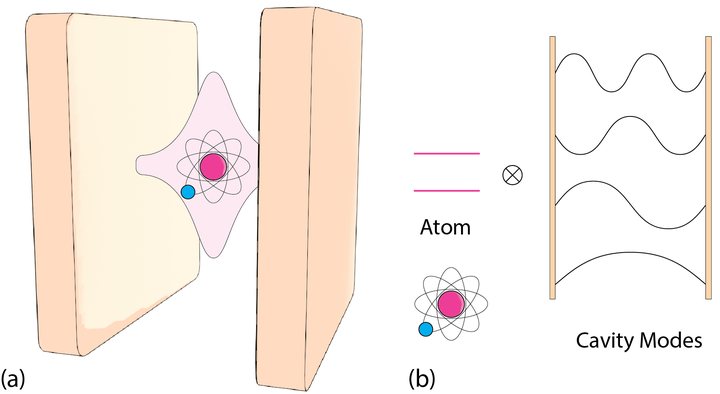
- arXiv Hardware-efficient formulation of molecular cavity-QED Hamiltonians
A formulation of cavity-QED Hamiltonians designed for near-term quantum computers, built in Qiskit Nature. Choosing the photonic basis carefully avoids fidelity problems caused by hardware connectivity and gate errors.
Journal articles
2026
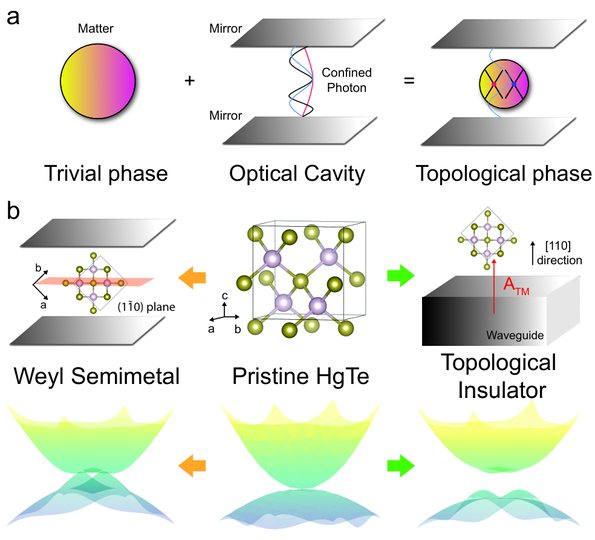
- Sci. Adv. Multiple photon field–induced topological states in bulk HgTe
Photon fields in cavities and waveguides can break the symmetry of bulk HgTe. QEDFT calculations show that this drives the material into Weyl, nodal-line or topological-insulator phases, depending on how light couples to it.
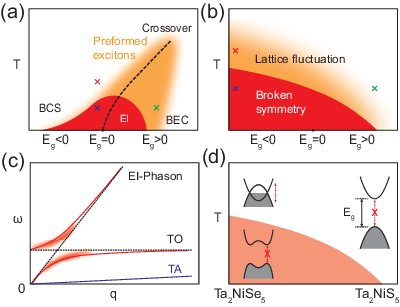
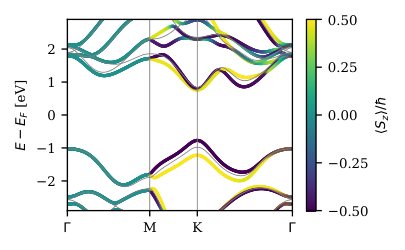
- PRMaterials Strong long-wavelength electron-phonon coupling in Ta2Ni(Se,S)5
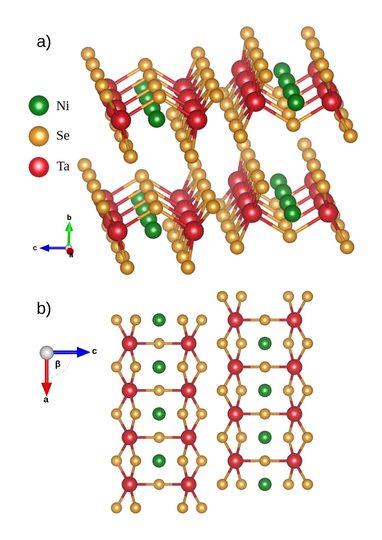
Inelastic X-ray scattering reveals strongly anisotropic phonon broadening and softening in the normal state of Ta2NiSe5, absent in its sister compound Ta2NiS5. This long-wavelength signature points to a coupling between phonons and the excitonic order.
- J. Phys. Mater. The 2025 roadmap to ultrafast dynamics: frontiers of theoretical and computational modeling
A community roadmap on the theory and simulation of ultrafast dynamics in materials. Our section covers cavity materials engineering and the first-principles QEDFT framework used to describe matter in photonic environments.
- Nat. Commun. Cavity-QED-controlled two-dimensional Moiré excitons without twisting
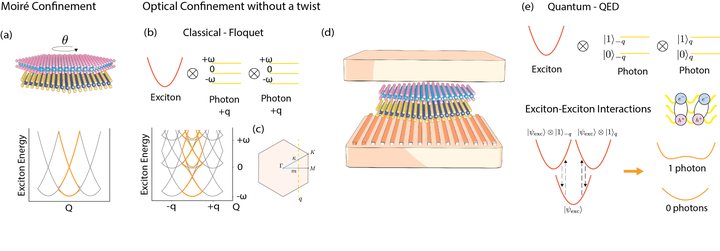
Spatially periodic optical cavities can confine excitons in a moiré-like pattern without twisting any layers. Even in a dark cavity, vacuum fluctuations alone reshape the exciton bands through long-range photon-mediated interactions.
2025
- Commun. Phys. Effective equilibrium theory of quantum light-matter interaction in cavities for extended systems and the long wavelength approximation
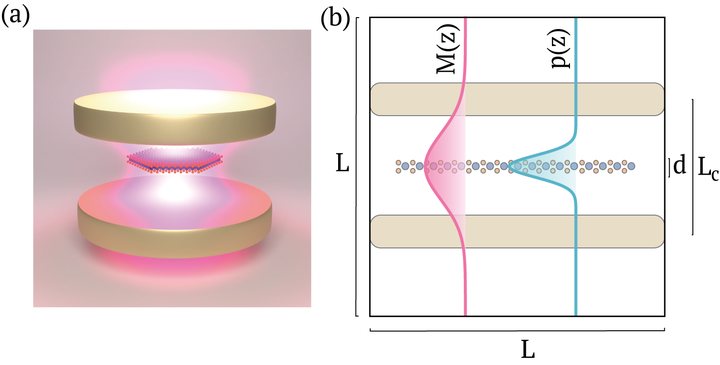
An effective, non-perturbative theory for 2D crystals inside a Fabry-Pérot resonator, reducing the many dispersive cavity modes to a single effective mode. It shows when the common long-wavelength approximation holds and where it breaks down.
- Sci. Adv. Cavity-mediated electron-electron interactions: Renormalizing Dirac states in graphene
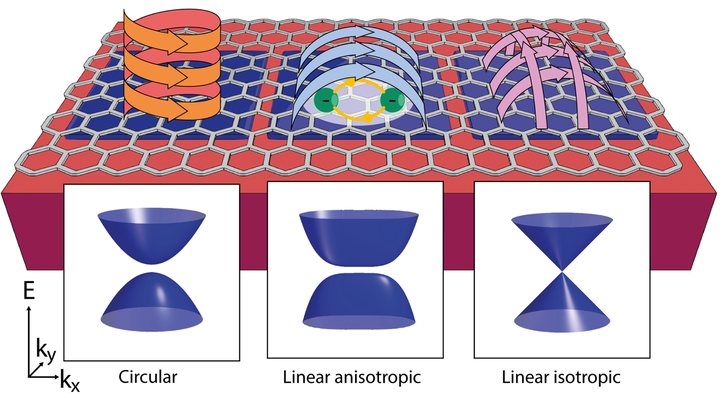
A photon-free Hartree-Fock approach captures how cavity vacuum fluctuations add non-local electron-electron interactions in graphene. Depending on the photon polarization, the Dirac cones are renormalized and can even open a gap.
- Opt. Mater. Express Modifying electronic and structural properties of 2D van der Waals materials via cavity quantum vacuum fluctuations: a first-principles QEDFT study
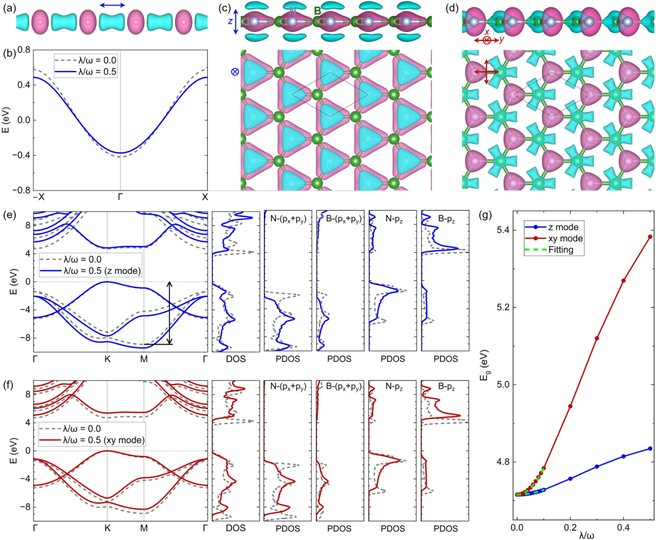
QEDFT calculations show that cavity vacuum fluctuations localize the electron density along the photon polarization in a range of 2D van der Waals materials. This shifts energy valleys and changes interlayer spacings, offering a handle on material properties.
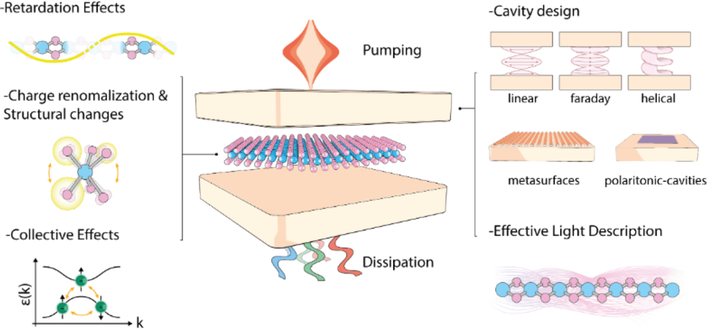
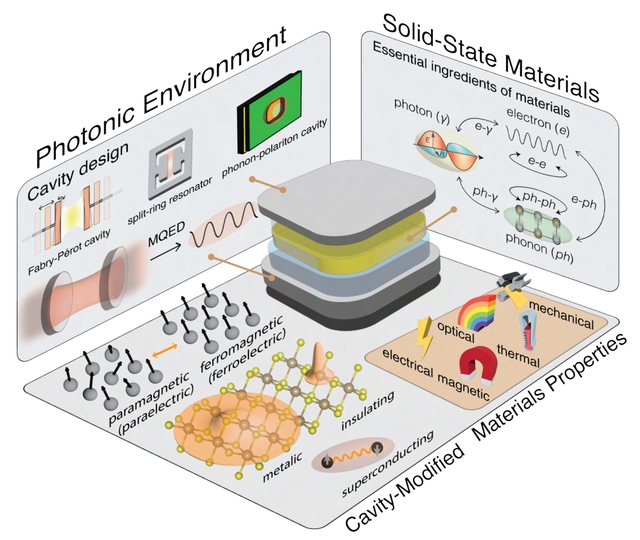
- Adv. Opt. Photon. Cavity engineering of solid-state materials without external driving
A review of cavity materials engineering: changing material properties at equilibrium using only the vacuum fluctuations of confined light. It covers ab initio theory, key predictions and experimental progress.
2024
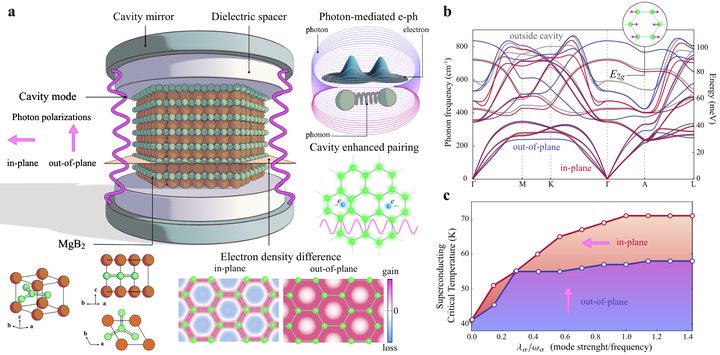
- PNAS Cavity-enhanced superconductivity in MgB2 from first-principles quantum electrodynamics (QEDFT)
First-principles QEDFT predicts that coupling MgB2 to cavity vacuum fluctuations raises its superconducting transition temperature. Cavity photons modify the electron-phonon coupling that drives superconductivity.
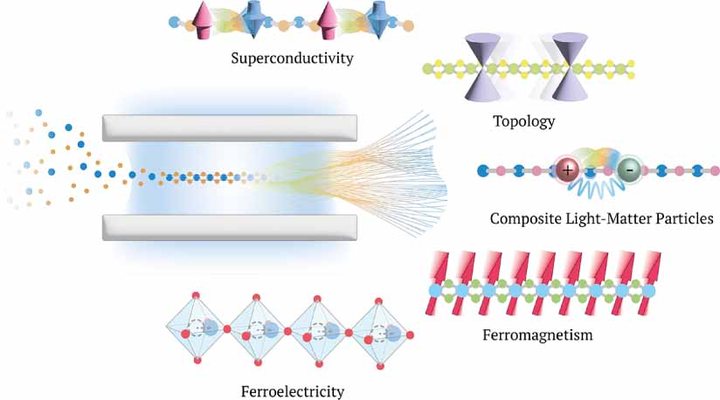
- Mater. Quantum Technol. Quantum materials engineering by structured cavity vacuum fluctuations
A perspective on how structured cavity vacuum fluctuations can switch the ground state of materials. Three theoretical scenarios illustrate quantum phase transitions induced in the dark, without any photons in the cavity.
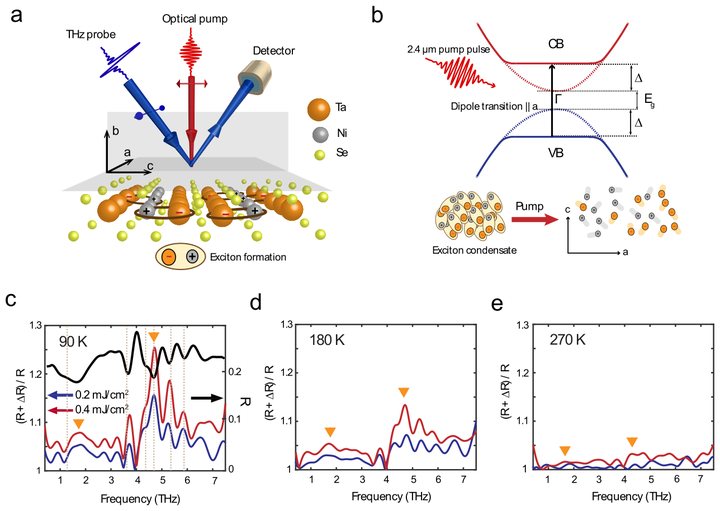
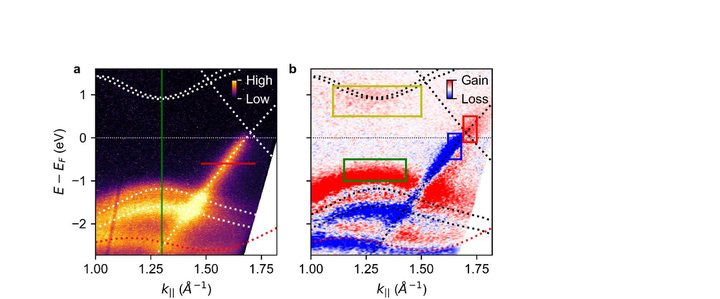
- Nat. Mater. Terahertz parametric amplification as a reporter of exciton condensate dynamics
After photoexcitation, the terahertz reflectivity of Ta2NiSe5 is amplified with a condensate-like temperature dependence. This parametric amplification acts as a probe of exciton condensate dynamics hidden behind lattice effects.
- PRA Electron-photon exchange-correlation approximation for quantum-electrodynamical density-functional theory
Tests an electron-photon exchange functional for QEDFT beyond one dimension and proposes a practical approximation for real materials. The approach reproduces cavity-modified electron densities in two- and three-dimensional systems.
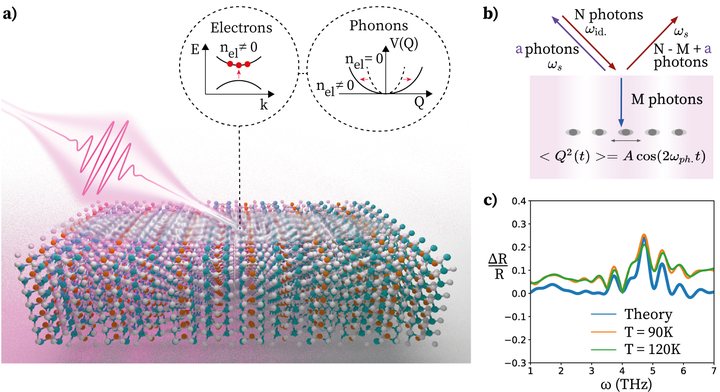
- Nat. Commun. Photonic time-crystalline behaviour mediated by phonon squeezing in Ta2NiSe5
Photoexcitation of Ta2NiSe5 creates a squeezed phonon state whose fluctuations oscillate in time. This makes the material behave like a photonic time crystal, seen as narrow-band terahertz amplification of reflectivity.
- J. Chem. Phys. GPAW: An open Python package for electronic structure calculations
A review of GPAW, the open-source Python code for density functional theory based on the projector-augmented wave method. It describes the three basis representations, the many beyond-DFT features and the integration with ASE.
- Nano Lett. Strain-Tunable Hyperbolic Exciton Polaritons in Monolayer Black Arsenic with Two Exciton Resonances
Monolayer black arsenic hosts in-plane hyperbolic exciton polaritons arising from two exciton resonances. Strain can merge the two resonances, doubling the hyperbolic response and tuning its frequency.
2023
- 2D Mater. Link between interlayer hybridization and ultrafast charge transfer in WS2-graphene heterostructures
Time- and angle-resolved photoemission combined with electronic structure theory shows how interlayer hybridization controls ultrafast charge transfer in WS2-graphene heterostructures.
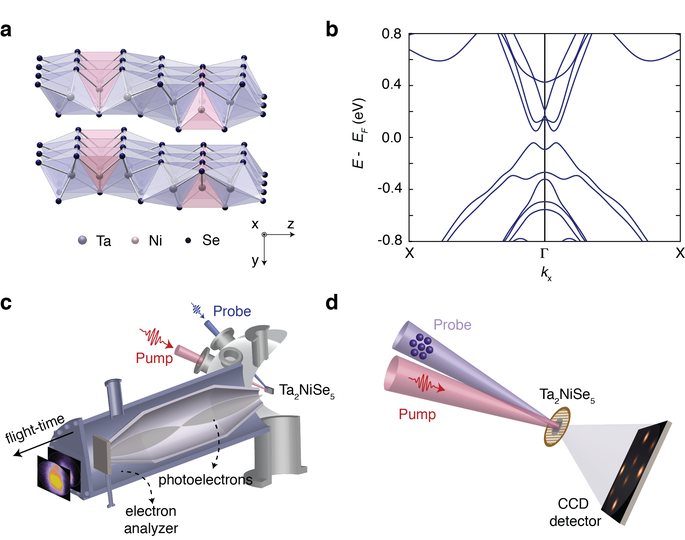
- PNAS The spontaneous symmetry breaking in Ta2NiSe5 is structural in nature
Nonequilibrium spectroscopy and first-principles calculations show that the symmetry breaking in Ta2NiSe5 is mainly structural, not excitonic. The work sets out a protocol to disentangle electronic and lattice instabilities.
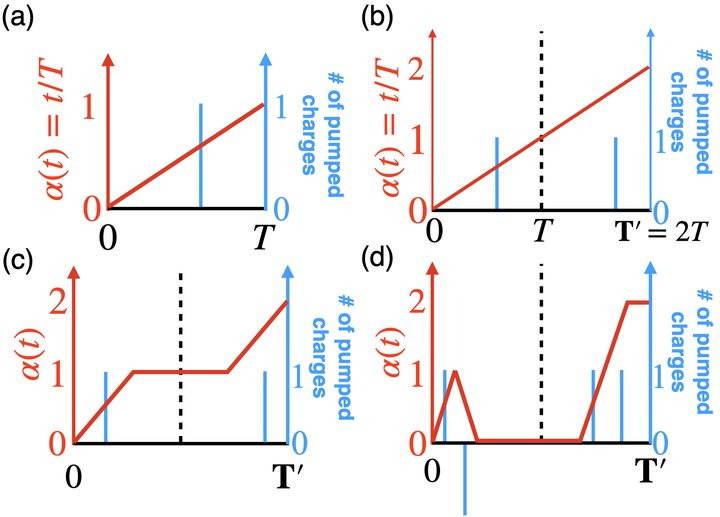
- PRResearch Time-based Chern number in periodically driven systems in the adiabatic limit
In periodically driven systems in the adiabatic limit, the Chern number defined with time as a synthetic dimension is a multiple of the Chern number of the driving parameter. Thouless pumping in tight-binding chains illustrates the result.
2022
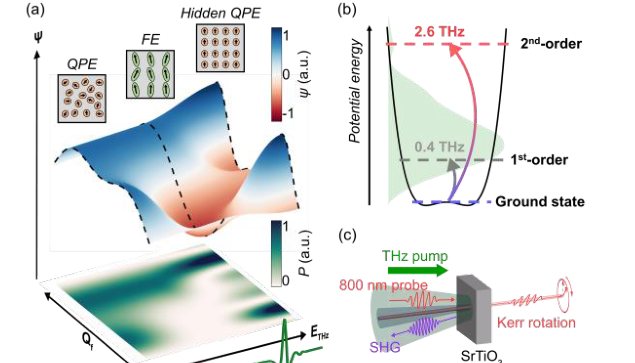
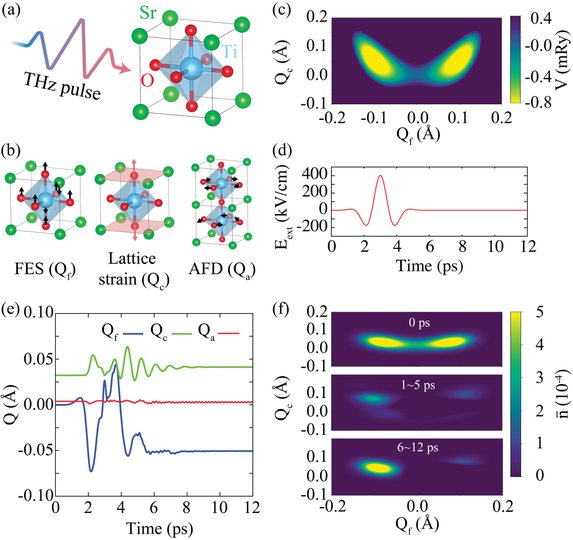
- PRL Simulating Terahertz Field-Induced Ferroelectricity in Quantum Paraelectric SrTiO3
Solving the time-dependent lattice Schrödinger equation from first principles shows how a terahertz pulse turns quantum paraelectric SrTiO3 ferroelectric. The transition comes from light-induced mixing of the ground and first excited lattice states.
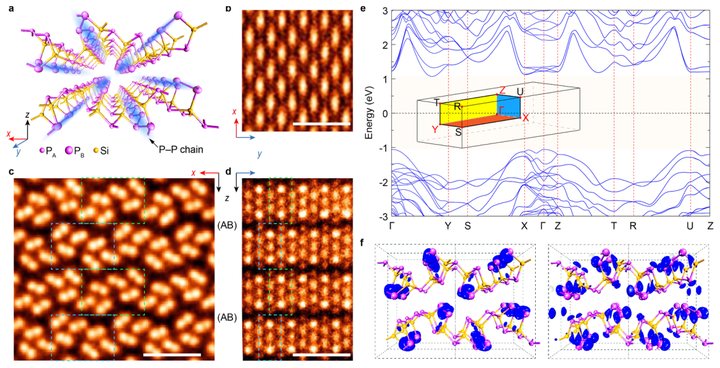
- Nat. Mater. Unconventional excitonic states with phonon sidebands in layered silicon diphosphide
Layered silicon diphosphide hosts an unusual exciton made of electrons confined to one-dimensional phosphorus chains and holes spread over two-dimensional layers. A bound phonon sideband accompanies it, with strong linear dichroism.
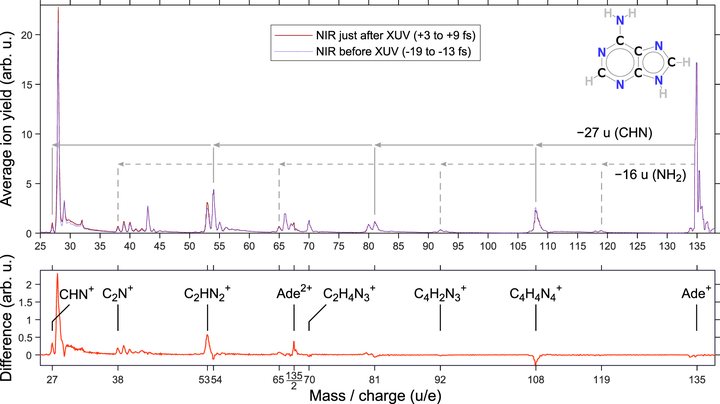
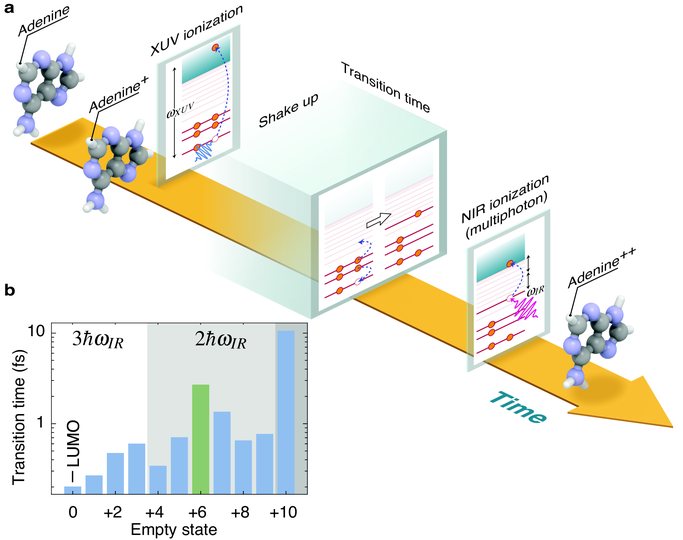
- J. Phys. Photonics Ultrafast dynamics of adenine following XUV ionization
Attosecond XUV and few-femtosecond infrared pulses track the dynamics of ionized adenine across many fragmentation channels. The study connects ultrafast electronic and nuclear motion in a biologically relevant molecule.
2021
- npj Comput. Mater. Common microscopic origin of the phase transitions in Ta2NiS5 and the excitonic insulator candidate Ta2NiSe5
First-principles calculations show that phonon instabilities break the crystal symmetry in both Ta2NiSe5 and Ta2NiS5. The energy landscape shows no tendency towards a purely electronic, excitonic instability.
- PRB Quantum paraelectric phase of SrTiO3 from first principles
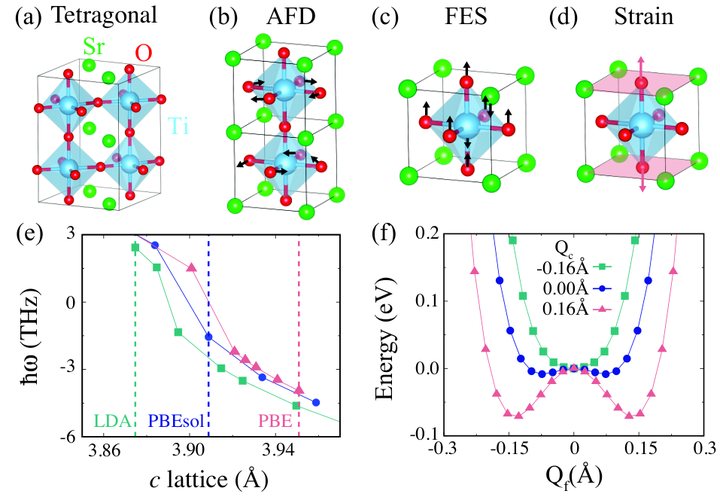
An ab initio approach reproduces the quantum paraelectric ground state of SrTiO3, where lattice quantum fluctuations prevent ferroelectric order. Coupling between the soft mode and lattice strain is key for quantitative agreement with experiment.
- PNAS The ferroelectric photo ground state of SrTiO3: Cavity materials engineering
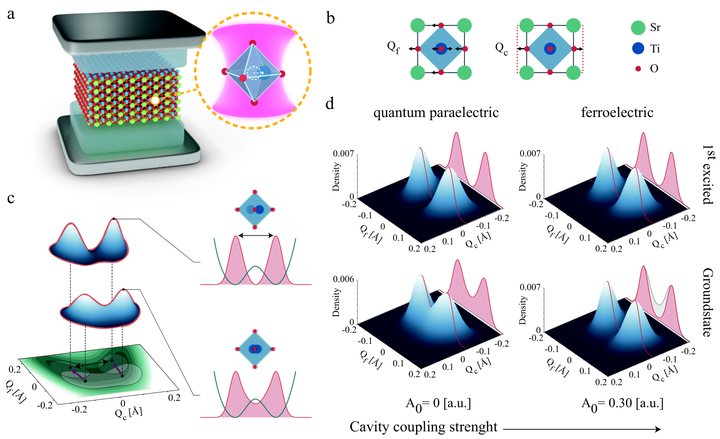
In the strong light-matter coupling regime, cavity vacuum fluctuations stabilize ferroelectricity as the ground state of SrTiO3. We call this light-matter hybrid ground state a material photo ground state.
- PRL Phonoritons as Hybridized Exciton-Photon-Phonon Excitations in a Monolayer h-BN Optical Cavity
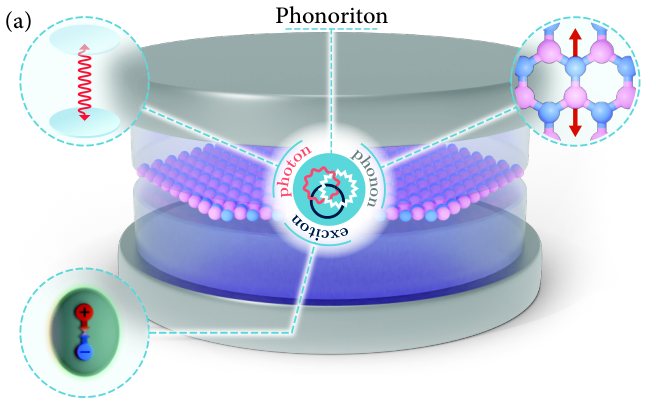
Monolayer hBN in an optical cavity hosts phonoritons, hybrid excitations of excitons, photons and phonons. We predict clear spectroscopic signatures and propose a realistic route to observe them.
- Commun. Chem. Real-time observation of a correlation-driven sub 3 fs charge migration in ionised adenine
Attosecond pump-probe spectroscopy captures charge migration in ionized adenine within 3 femtoseconds. Many-body simulations trace this ultrafast motion to electron correlation.
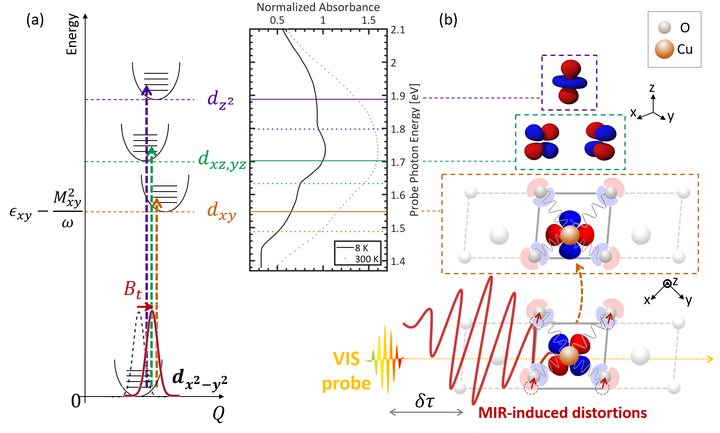
- Nat. Phys. Vibrational coherent control of localized d–d electronic excitation
Coherent lattice vibrations driven by mid-infrared pulses control localized d-d electronic transitions in CuGeO3. The experiment separates the effect of coherent atomic motion from incoherent thermal fluctuations.
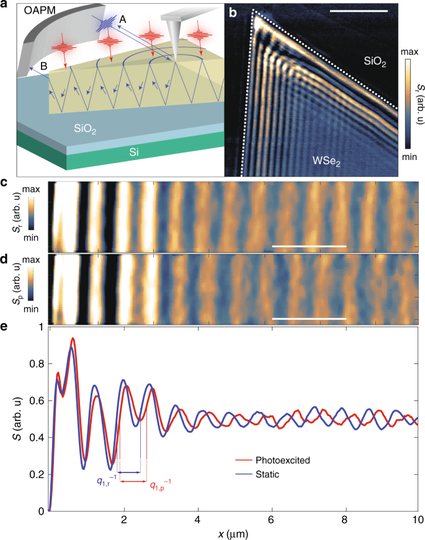
- Science Programmable hyperbolic polaritons in van der Waals semiconductors
Ultrafast optical pumping turns on hyperbolic dispersion in the van der Waals semiconductor WSe2, creating a transient waveguide for polaritons. This gives an all-optical switch for subwavelength light confinement.
2020
- Nat. Commun. Femtosecond exciton dynamics in WSe2 optical waveguides
Time-resolved near-field microscopy images waveguide modes in WSe2 in real space and time after femtosecond excitation. Tracking their phase velocity reveals the ultrafast dynamics of the excitons.
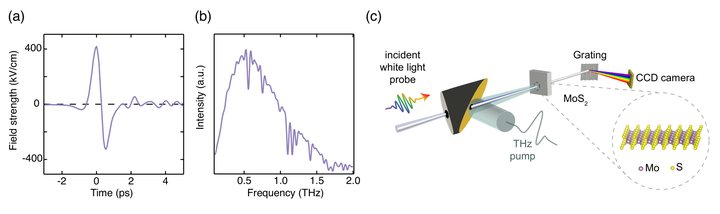
- Nano Lett. Room Temperature Terahertz Electroabsorption Modulation by Excitons in Monolayer Transition Metal Dichalcogenides
A strong terahertz field shortens the coherence lifetime of excitons in monolayer MoS2 while leaving their energy and strength unchanged. We explain this as a Franz-Keldysh effect on an exciton resonance, giving large modulation at room temperature.
- PRL Nature of Symmetry Breaking at the Excitonic Insulator Transition: Ta2NiSe5
A symmetry analysis based on first-principles calculations identifies which lattice symmetries break at the transition in Ta2NiSe5. It defines an excitonic order parameter that contributes to the observed distortion.
- JACS Contrasting Efficiency of Electron-Induced Reaction at Cu(110) in Aliphatic and Aromatic Bromides
Scanning tunneling microscopy compares electron-induced C-Br bond breaking in pentyl and phenyl bromide on Cu(110). The aliphatic molecule reacts about a thousand times more efficiently than the aromatic one.
2019
- Nano Lett. Cavity Control of Excitons in Two-Dimensional Materials
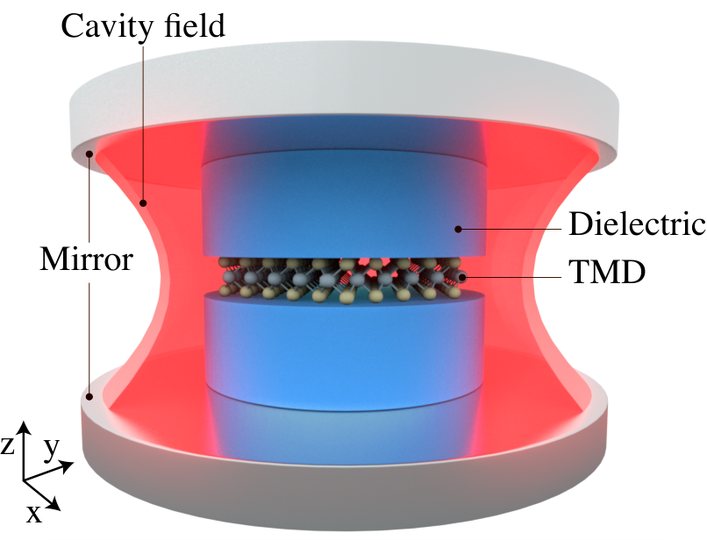
Embedding 2D materials and van der Waals heterostructures in optical cavities forms exciton-polaritons that reorder and mix bright and dark excitons. The dielectric environment provides an extra knob to tune the coupling.
2018
- Nat. Nanotechnol. Nano-imaging of intersubband transitions in van der Waals quantum wells
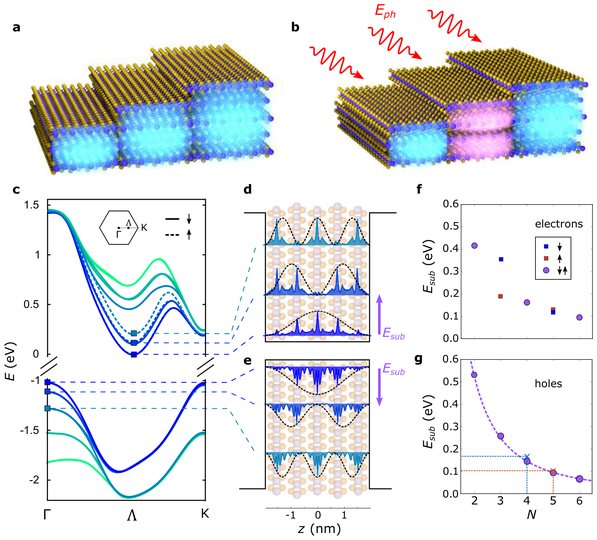
We introduce intersubband transitions in van der Waals quantum wells and report their first observation using infrared nano-imaging. The transition energies are set layer by layer by the number of stacked sheets.
- Nat. Commun. Dissociation of two-dimensional excitons in monolayer WSe2
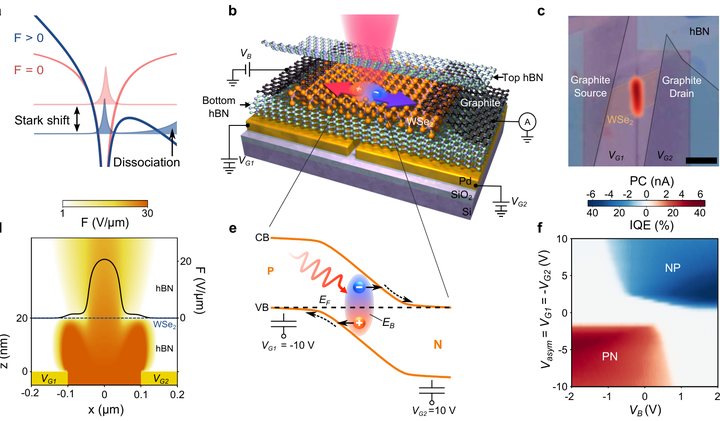
Time- and spectrally-resolved photocurrent measurements in a monolayer WSe2 p-n junction show that excitons dissociate by field-assisted tunnel ionization. The results give design rules for efficient 2D photodetectors.
2017
- Nano Lett. Interlayer Excitons and Band Alignment in MoS2/hBN/WSe2 van der Waals Heterostructures
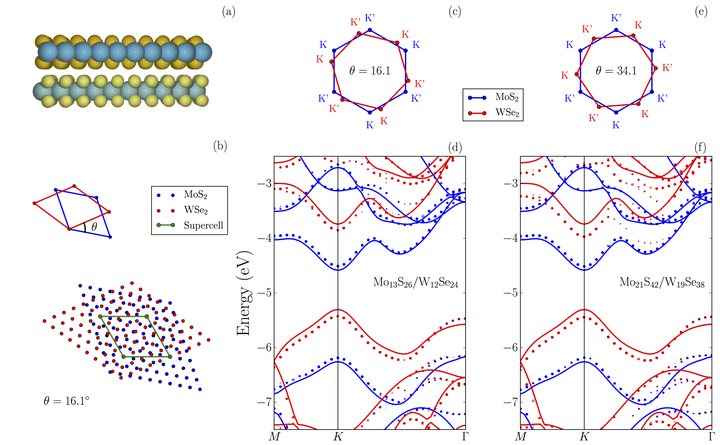
A first-principles method combining the quantum electrostatic heterostructure model with GW and a 2D exciton model gives band alignment and interlayer exciton energies in incommensurate heterostructures, applied to MoS2/hBN/WSe2.
2016
- PRB Stark shift and electric-field-induced dissociation of excitons in monolayer MoS2 and hBN/MoS2 heterostructures
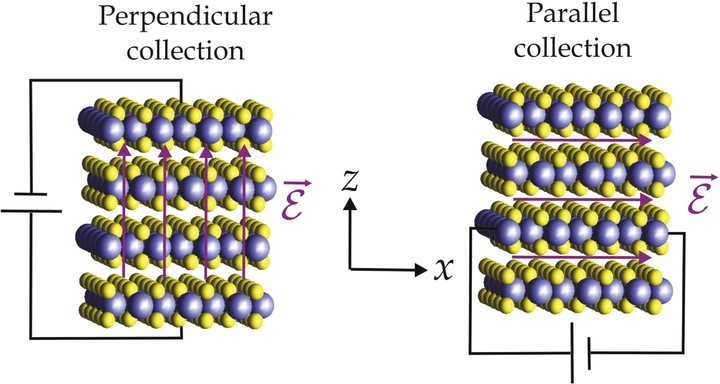
Calculations of how in-plane electric fields shift and ionize excitons in monolayer MoS2, and how an hBN substrate changes this through dielectric screening.
- New J. Phys. Exciton ionization in multilayer transition-metal dichalcogenides
Field-assisted ionization of excitons in multilayer transition-metal dichalcogenides depends strongly on field orientation, and direct and indirect excitons behave in opposite ways. WSe2 and MoSe2 emerge as the best candidates for devices.
- PRL Simple Screened Hydrogen Model of Excitons in Two-Dimensional Materials
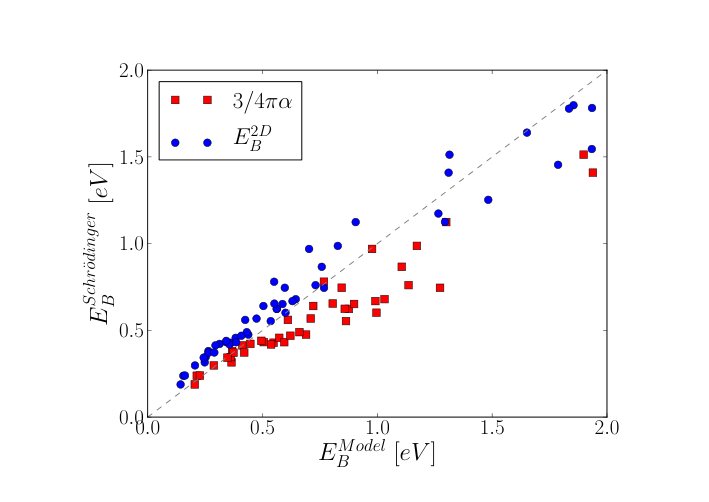
A generalized hydrogen model for excitons in 2D materials uses an effective dielectric constant averaged over the exciton size. Binding energies depend only on the exciton mass and the 2D polarizability, and match calculations for 51 materials.
2015
- PRB Excitons in van der Waals heterostructures: The important role of dielectric screening
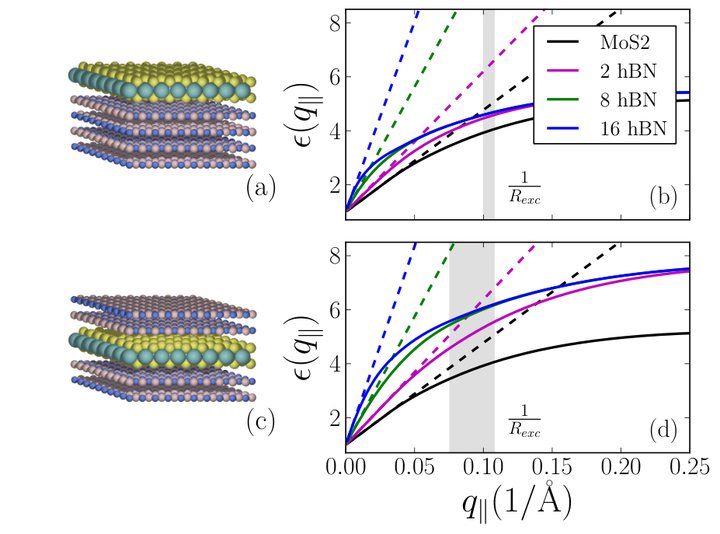
A quasi-2D exciton model with a fully ab initio dielectric function improves on the widely used strict 2D model. It shows how dielectric screening controls exciton binding energies in van der Waals heterostructures.
- Nano Lett. Dielectric Genome of van der Waals Heterostructures
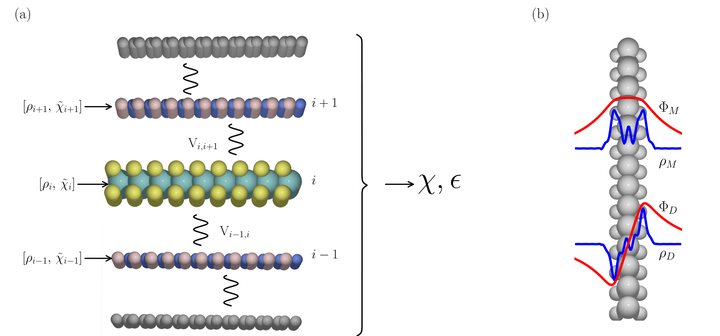
The dielectric response of van der Waals heterostructures with hundreds of layers is computed with ab initio accuracy by coupling the dielectric building blocks of the individual layers. This makes realistic, incommensurate stacks accessible to theory.
2014
- PRB Charge dynamics in molecular junctions: Nonequilibrium Green’s function approach made fast
A simplified nonequilibrium Green’s function scheme based on the generalized Kadanoff-Baym ansatz makes real-time simulations of molecular junctions much faster, while staying close to the full Kadanoff-Baym results.
- APL Manipulating surface diffusion and elastic interactions to obtain quantum dot multilayer arrangements over different length scales
Growing InAs quantum dots near critical conditions with an oblique arsenic flux produces correlated dot chains over mesoscopic distances. Surface diffusion, rather than buried strain, guides where new dots form.